I am white and Malaysian Chinese, though not everyone can tell this straight away. My mother was born in Malayia and moved to Aotearoa New Zealand when she was seventeen. I was born in Wellington. We moved to New York when I was three for my parents’ work, moved back to Wellington four years later, then packed up again four years after that and relocated to Shanghai. I was fifteen when we left Shanghai to move back home again, although by then, home was a slippery word.
Home is not a place but a collection of things that have fallen or been left behind: dried agapanthus pods, the exoskeletons of cicadas (tiny ghosts still clinging to the trees), the discarded shells of quail eggs on Po Po’s plate, cherry pips in the grass, the drowned chrysanthemum bud in the bottom of the teapot. Some things are harder to hold in my arms: the smell of salt and suncreen, mint-green blooms of lichen on rock, wind-bent pohutukawa trees above valleys of driftwood.
Swimming, Identity, Belonging
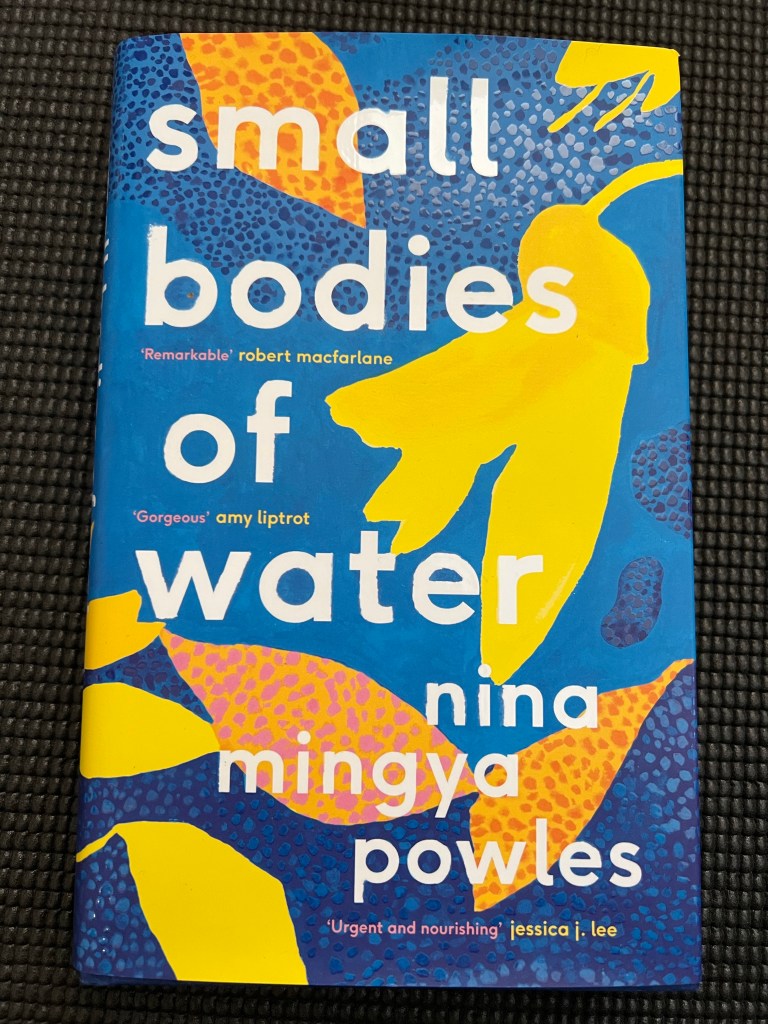
I first came across Nina Mingya Powles in one of my all-time favourite books, At The Pond: a collection of essays about swimming at Hampstead Ladies’ Pond in London. In that piece, she writes of rainforest clouds and floating frangipani petals in Malaysia, scuttling pink crabs and the holy underwater silence in an outdoor pool in Shanghai, summer storm debris in Wellington harbour – and of course, of the pond on the Heath. She also writes of Chinese characters, water radicals, and of learning the words to describe the landscape of the Heath, to name UK native birds. Strange, almost mythical words to her ears: alder, hazel, yew, ash, siskin, redwing, mistlethrush, kestrel – she contrasts them with those more familiar: tuui, pukeko, kaakaa, ruru, takahee.
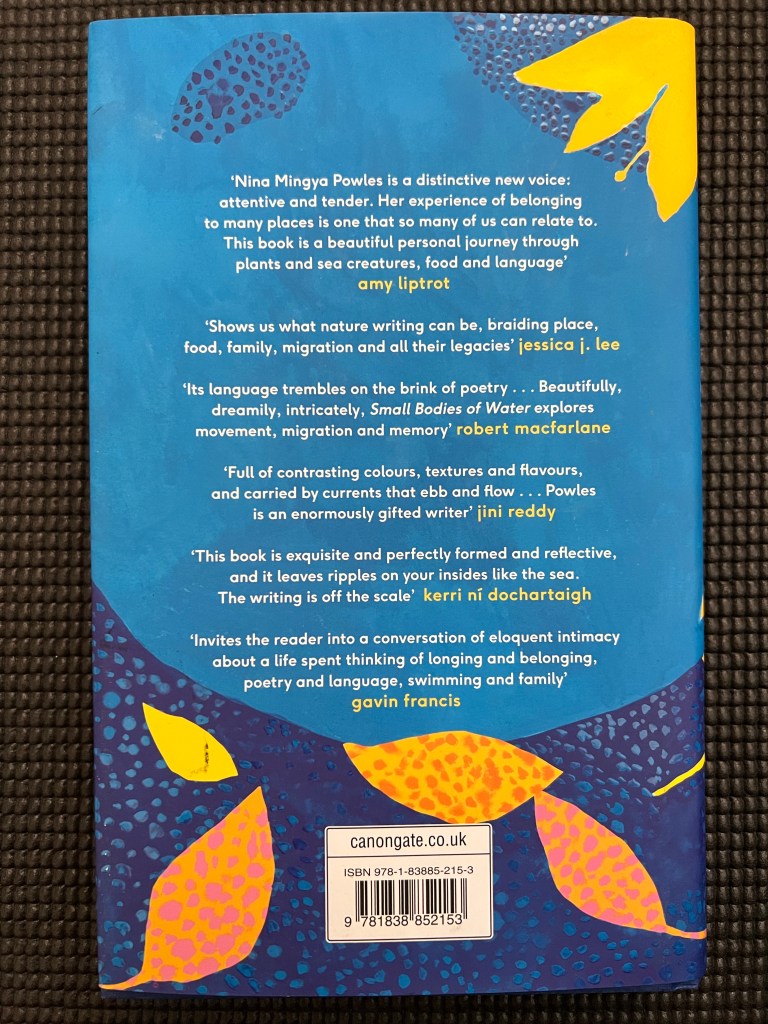
Small Bodies of Water absorbs this writing and offers up more: following memories across continents, uncovering paths stretching back into the past, literal ones, metaphorical ones, and returning always to the present, the confluence of everything that came before. It is so evocative that you can feel yourself there. Among the landscapes and across the history of the UK, China, Malaysia, New Zealand, but also in the body and mind of someone who doesn’t have a ready home among so many riches, someone whose heart may always ache a little for that slightly other version of life she could be living across the vast sprawling distances that separate one home from another.
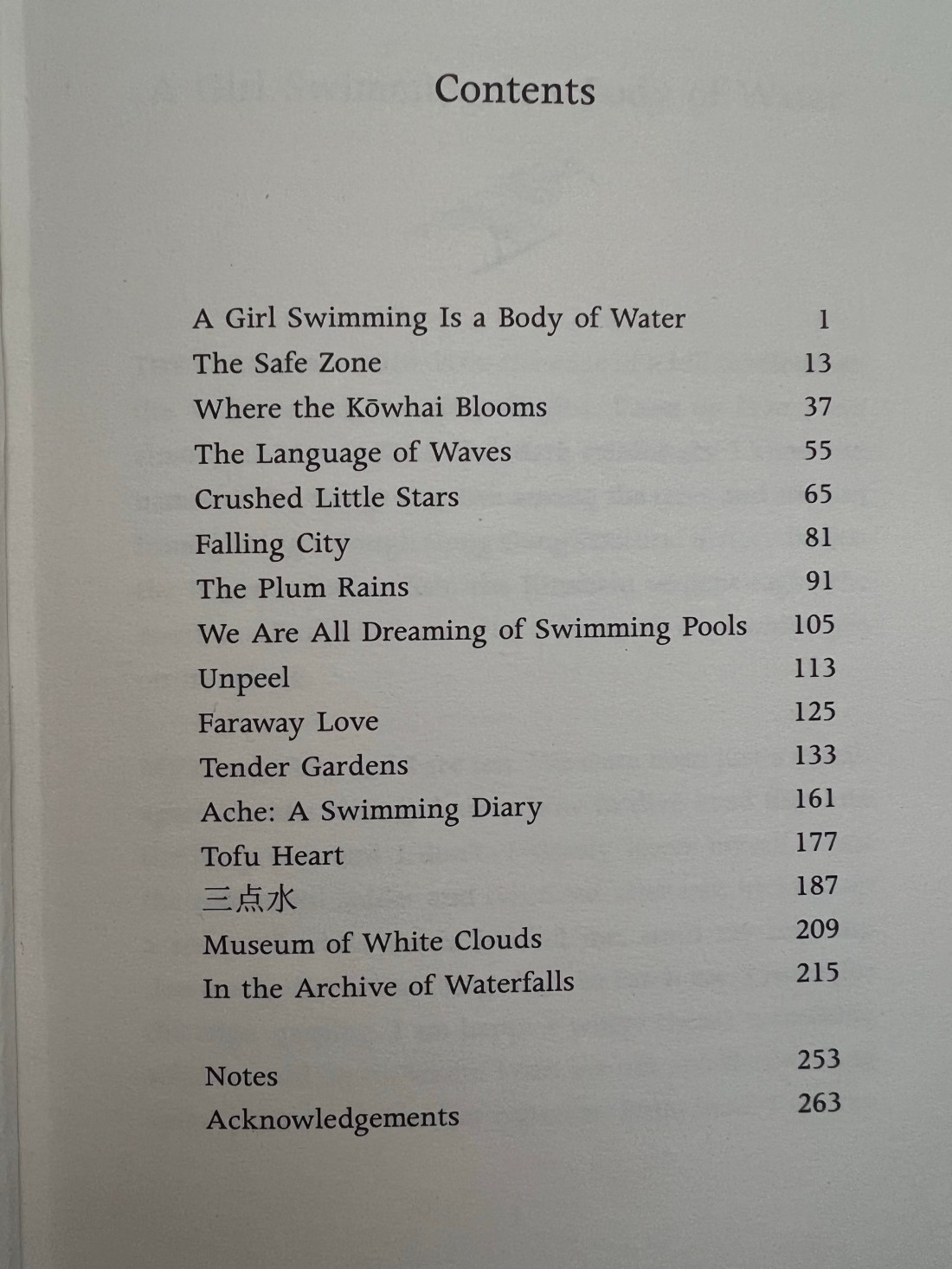
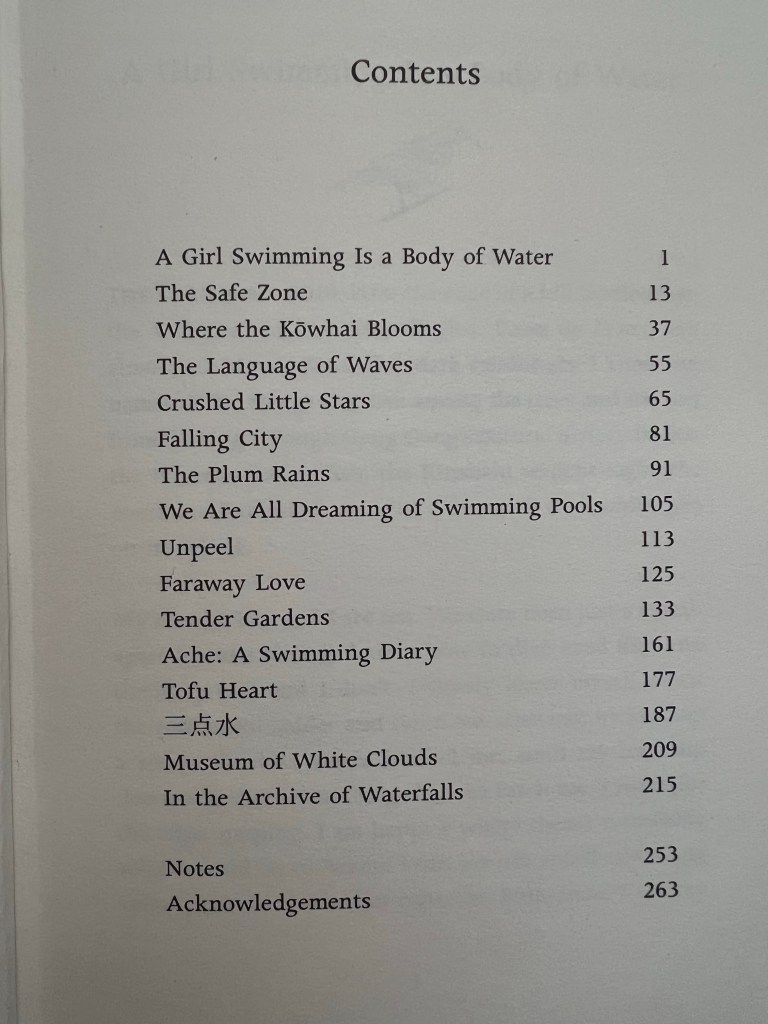
It is exciting writing. I remember savouring the contents page, a sudden rush pulsating through my body: feeling heady and alive, as though standing at the door of an airplane looking out over a new land. It is the pleasure of knowing that challenges and adventures lie ahead, unfamiliar sights and sounds, different ways of thinking. And it is heartbroken, heartrending writing too, distilling down that intense loneliness and insatiable quest for connection that our ever-connected world magnifies if not creates.
Of course, for me, it is personal. I too grew up across too many places to know which to call home. I too grew up exposed to the immense wonder of the world, hungered for more, have always gone in search for it, and only realised much later the personal cost. This blog I think captures something of that: from my earliest happiest posts, to a more nuanced joy, through homesickness and longing and grief, in search of a way of living that can reconcile my life out here in New Zealand with the shadow lives I left behind. And now I have a family out here, a son who is a first generation New Zealander. And the need to define home, if only to myself, feels all the more urgent and elusive.
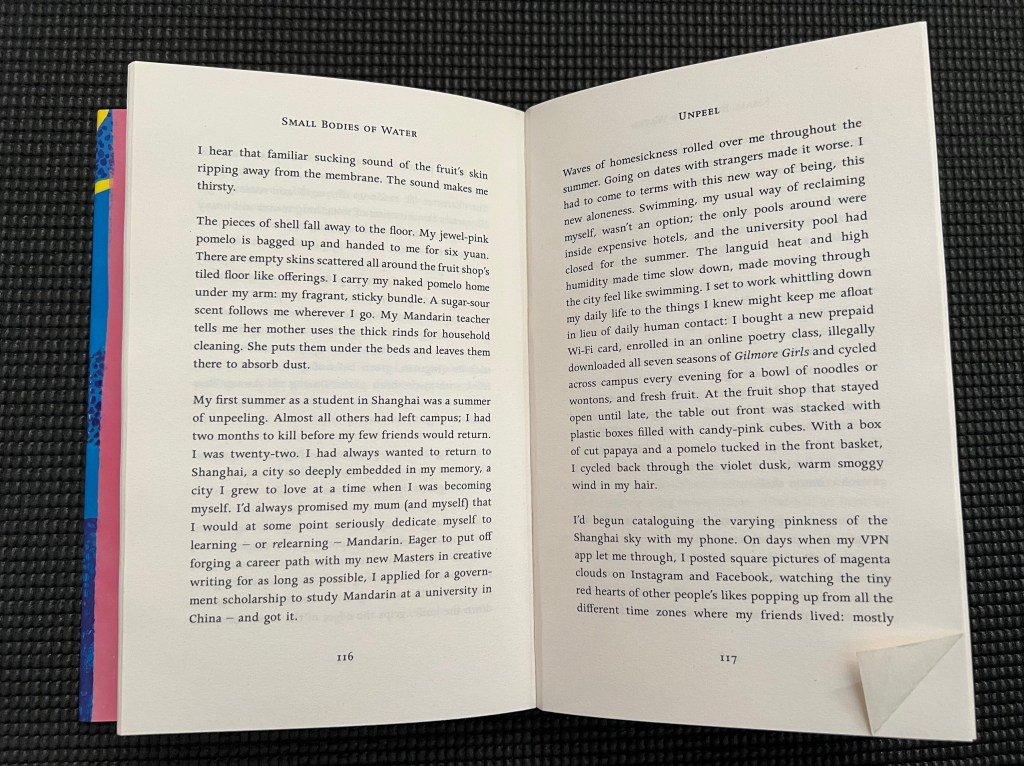
I recognise myself in so many facets of this book. The child becoming aware of herself as Other in the eyes of others. The girl studying a foreign language abroad, delighting in everything new, but so achingly isolated at the same time. The young woman learning how to make space to just be, to string together moments of being present, until they pool into one another and become something other, a way of existing, perhaps, if not immediately intentional living. I too catalogued ways to stay afloat, developed rituals, grasped for words to describe the world around me, all the while trying to edge closer to a sense of self, to an authentic voice. I too have returned to swimming over and again, as a way to survive all of this.
In view of that, is difficult for me to take a step back, to imagine how someone else might experience this writing. But I know that among the readers of this blog there are enough of you who have shared aspects of my lived experience, friends I’ve made at different points along the way. So if this speaks to you at all, if it intrigues you, then I am so curious to hear your thoughts. Let me know.
Where is the place your body is anchored? Which body of water is yours? Is it that I’ve anchored myself in too many places at once, or nowhere at all?


I need to read this – very inspiring!